
Why Prototheca moriformis Leads the Field in Microalgae Lipid Production
Why use microalgae to make fats and oils?
For brands developing the next generation of nutrition, food, and personal care products, the better question might be: why use anything else?
Microalgae are among nature’s most effective oil producers. At Checkerspot, that matters because the future of fats and oils depends on more than finding another source. It depends on designing ingredients with the right molecular profile, producing them consistently, and scaling them through infrastructure the industry already understands.
That is why the Checkerspot platform is built around Prototheca moriformis, a heterotrophic microalga with exceptional capacity for lipid production. In a comparison of oil content across more than 150 microbes, the average oil content was 44% of dry cell weight. Prototheca moriformis stands at the top of the field. That high oil content is not a technical footnote. It is the foundation for efficient microalgae oil production, reliable fermentation-derived oils, and a new path to specialty lipids that are difficult to source through conventional agriculture.
Microalgae Are Built to Make Fats and Oils
Many microalgae are, among other things, fat-making machines.
Microalgae have evolved over billions of years to soak up sunlight and store it into high-energy reserves, like fat. But not all microalgae are created equal and some have evolved to eat sugar as their main source of energy to then store as fat. Prototheca moriformis does this with remarkable efficiency and robustness which makes it ideally suited for precision fermentation processes.
That matters for R&D teams because yield and productivity shape everything downstream: cost modeling, scale-up planning, and whether a molecule can move from a compelling idea to a commercially relevant ingredient.
When you are designing ingredients from the ground up, every part of the production organism matters. A microbe that naturally makes more oil gives the process a stronger starting point. More lipid content means more of the target material can be produced from the same biological system. That is why Prototheca moriformis is so important to Checkerspot’s approach to precision fermentation of fats and oils.
Why Heterotrophic Microalgae Matter
Many people picture algae growing in open ponds or photobioreactors under sunlight. Prototheca moriformis works differently.
It is heterotrophic, meaning it does not rely on light to grow. Instead, it grows in enclosed fermentation tanks, consuming sugar under tightly managed conditions. That distinction creates a practical advantage for commercial microalgae oil production.
Light-dependent systems must account for variables like surface area, shading, weather, seasonal shifts, and contamination risk. Enclosed fermentation reduces many of those variables. It gives teams more control over the process and more confidence in the output.
The same strain. The same conditions. The same target oil profile. Batch after batch.
For manufacturers and formulators, consistency matters. It supports specification control, quality assurance, regulatory preparation, and supply chain planning. Traditional agricultural sources can vary based on geography, harvest conditions, climate, and crop cycles. A controlled microalgae fermentation platform is designed to deliver cleaner inputs, more predictable outputs, and traceable quality.
Precision At The Molecular Level
High fat content would be valuable on its own. But the real promise is molecular precision.
Fats and oils are not interchangeable. Their fatty acid composition and triacylglycerol structure influence nutrition, texture, melt behavior, oxidative stability, absorption, sensory performance, and skin feel. Small molecular differences can create meaningful product differences.
That is where Prototheca moriformis becomes more than a production organism. It becomes a design platform.
Checkerspot uses microalgae fermentation to access molecular compositions that are rare, hard to source, or not available in meaningful quantities through conventional channels. The goal is to help R&D teams design the right lipid for the right product outcome. This means that every new lipid we make is a specialty ingredient, by design.
That is the power of precision at the molecular level. It gives formulators a broader set of choices. Instead of asking which existing oil comes closest, teams can ask what molecule the product actually needs.
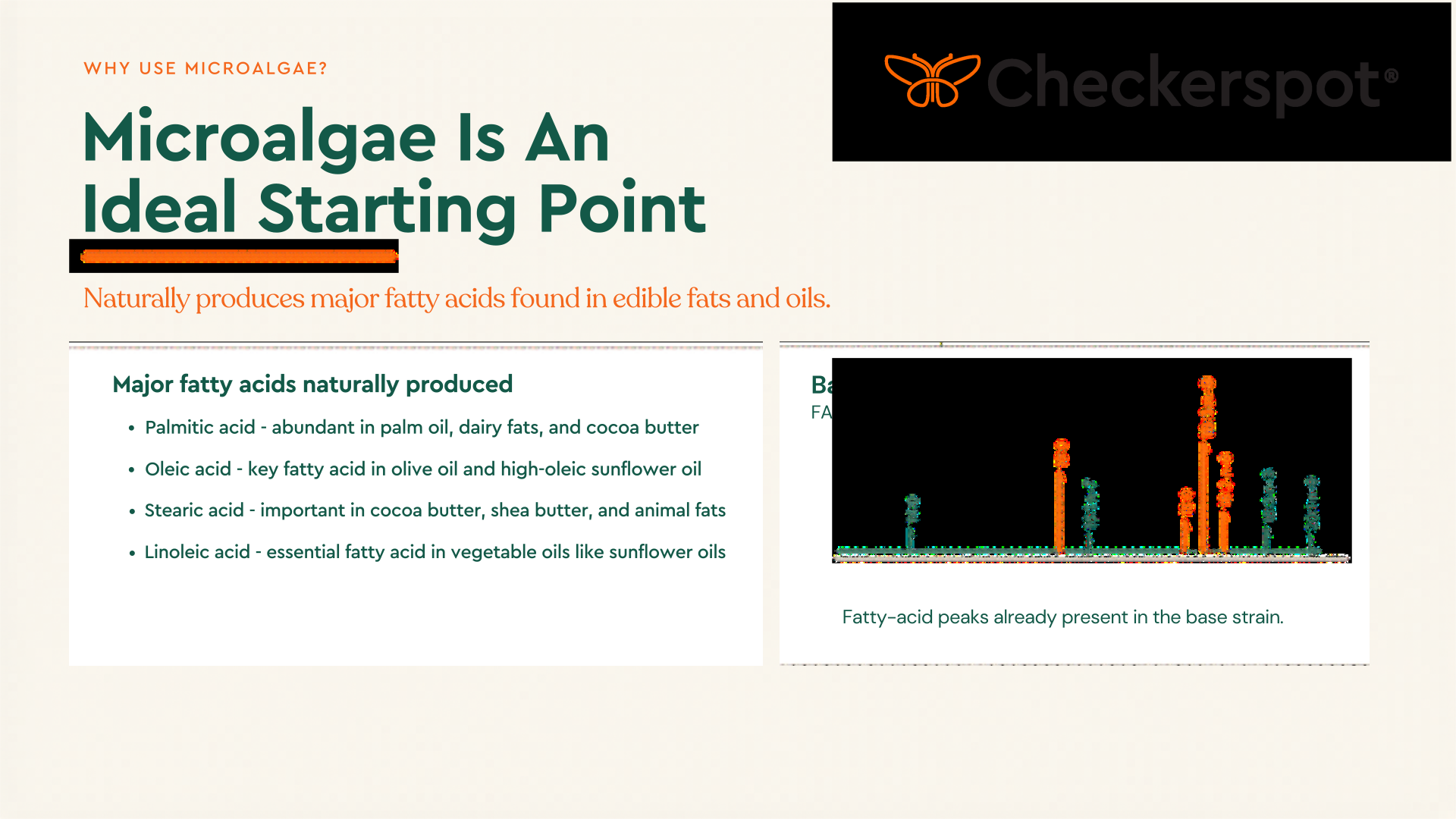
From OPO to Omega Fatty Acids
One example is OPO, short for 1,3-dioleoyl-2-palmitoyl-glycerol, a triacylglycerol found in human milk fat. OPO has long been relevant to infant nutrition because human milk fat has the largest amount of this particular species of fat than any other source suitable for feeding to infants. Recreating it from more common edible oils is difficult and costly.
Checkerspot’s microalgae platform proved uniquely suited to produce OPO at high titer as published in the journal Frontiers in Nutrition. It can replicate the fatty acid composition of OPO found in human milk fat by mimicking the total percentage of palmitic acid in the sn-2 position. This is a step change innovation that helps close the nutritional gap in modern infant formula products. More broadly speaking this matters in categories where nutritional performance, ingredient quality, and regulatory confidence are all essential.
The same principle applies beyond infant nutrition. In food, functional nutrition, GLP-1 companion products, personal care, and other health and wellness applications, brands increasingly need ingredients that do more than fill a label. They need fats and oils tuned for performance.
That could mean high-oleic profiles for stability. Structuring fats for texture. Omega fatty acids for health and wellness applications. Or other specialty lipids that support product differentiation.
Checkerspot’s platform creates room for that kind of product development. It
Built For Scale Through Familiar Infrastructure
Novel molecules only matter if they can move from concept to commercial reality.
Fermentation at scale is not new to food, nutrition, or pharmaceutical manufacturing. The process runs through stainless-steel tanks, controlled inputs, monitored conditions, and established downstream processing. That familiarity matters.
Because Prototheca moriformis does not require light, it can fit into this existing manufacturing logic. It does not need a sunlight-driven production environment. It can grow in enclosed systems designed for consistency, control, and repeatability.
For global health and wellness brands, that creates a clearer path to market. It means next-generation fats and oils can align with existing fermentation infrastructure and trusted supply-chain partners, rather than requiring an entirely new industrial system.
Checkerspot’s model is built around that reality. We develop the microalgal strains and the molecules they produce, then work with partners who can manufacture and commercialize at global scale. For customers, that means access to next-generation fats and oils without asking internal teams to carry every technical, regulatory, and scale-up burden alone.
What This Means For Manufacturers And Formulators
If you work in product development, the value of a lipid is measured in outcomes.
Can it deliver the nutritional profile you need? Can it create a better texture? Can it support a cleaner and more stable supply chain? Can it meet quality expectations in a regulated category? Can it scale?
Prototheca moriformis helps answer those questions with a stronger starting point. Its naturally high oil content supports production efficiency. Its heterotrophic growth enables enclosed fermentation. Its molecular flexibility supports tailored lipid profiles. Its fit with existing infrastructure supports scale.
That combination is why Checkerspot sees Prototheca moriformis as more than a source of oil. It is the foundational pillar of our biology-driven platform for designing the next generation of fats and oils.
Commonly Asked Questions
What is Prototheca moriformis?
Prototheca moriformis is a heterotrophic microalga used by Checkerspot to produce tailored fats and oils through fermentation. It consumes sugar rather than relying on light, which allows it to grow in enclosed fermentation tanks.
Why use microalgae for oil production?
Microalgae are naturally efficient at producing lipids. For ingredient developers, that efficiency can support better production economics, more consistent output, and access to specialty lipids that are difficult to source through conventional supply chains.
What kinds of ingredients can microalgae fermentation support?
Microalgae fermentation can support a range of specialty fats and oils, including structured lipids for nutrition, high-oleic oils, omega fatty acids, palmitoleic acid-rich oils, and other functional lipids designed for food, nutrition, and personal care applications.
Ready to learn more about microalgae?
Let’s get started today